
2023 / 04 / 06
How To Select Premium SPC Wall Panels


How To Select Premium SPC Wall Panels
What to Look for in Premium SPC Wall Panels
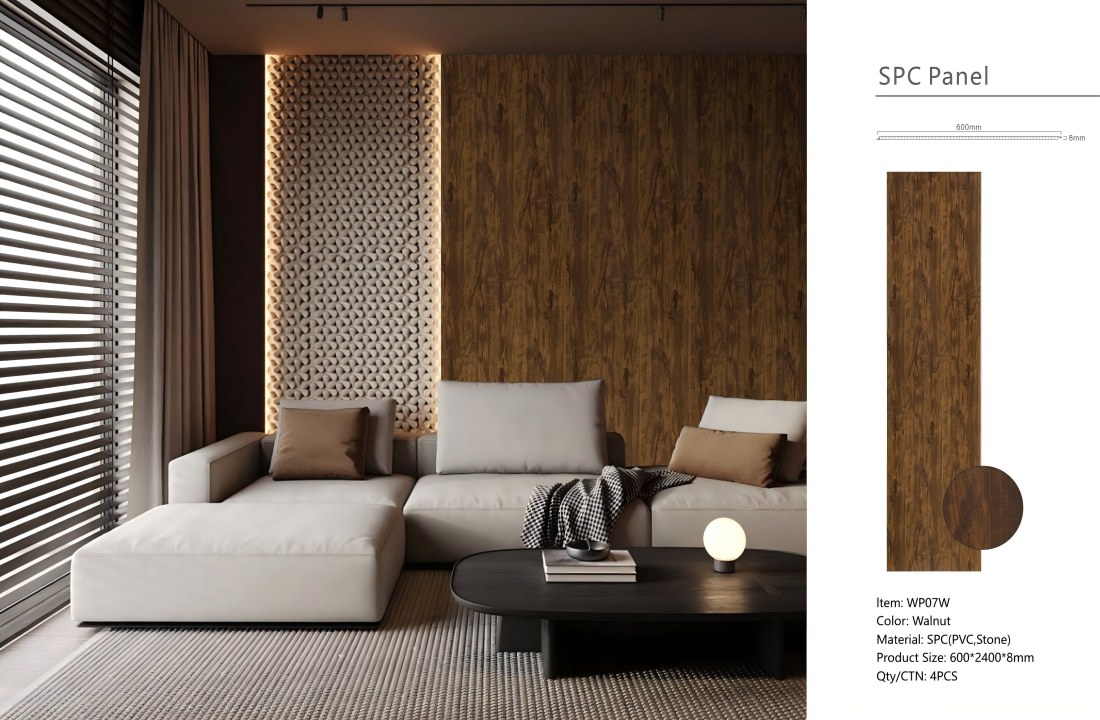
When selecting premium SPC wall panels, focus on four core criteria: core thickness (6mm–12mm for walls), surface wear layer quality, dimensional stability rating, and certification compliance. Panels that meet these benchmarks will deliver lasting performance across both residential and commercial environments. The sections below break down each factor in detail so you can make a confident, well-informed purchase.
What Are SPC Wall Panels and Why Do They Stand Out?
SPC stands for Stone Plastic Composite (sometimes called Stone Polymer Composite). The core is engineered from a blend of natural limestone powder, PVC resin, and stabilizers. This combination produces a rigid, dense panel that outperforms traditional materials in several measurable ways:
- 100% waterproof — no swelling, warping, or mold growth even in high-humidity rooms
- Dimensional stability across temperatures ranging from -20°C to 60°C
- Impact resistance far exceeding gypsum board or standard PVC panels
- Low VOC emissions, making them suitable for indoor air quality standards
- Easy click-lock or adhesive installation requiring no specialized tools
Compared to ceramic tile, wood paneling, or painted drywall, SPC wall panels deliver a superior balance of durability, aesthetics, and ease of maintenance — which is why demand has grown significantly across hospitality, healthcare, and residential sectors.
Core Thickness: The Foundation of Panel Performance
Thickness is the single most impactful specification to evaluate. For wall applications, panels are typically offered in the following ranges:
For most residential projects, 6mm to 8mm panels strike the ideal balance between performance and cost. In commercial environments — hotels, clinics, retail spaces — panels of 9mm or above are strongly recommended due to the higher frequency of physical contact and cleaning cycles.
Surface Wear Layer: Where Quality Becomes Visible
The wear layer is the transparent protective coating bonded to the top surface. Its thickness directly determines how long the panel’s decorative finish will remain intact. Thicker wear layers resist scratching, staining, and UV fading more effectively.
Wear Layer Thickness Guide
- 1mm – 0.2mm:Entry-level. Suitable only for low-touch wall areas away from direct contact.
- 3mm – 0.5mm:Mid-range. Handles moderate contact and standard cleaning agents without visible degradation.
- 5mm and above:Premium grade. Recommended for commercial use, especially in kitchens, bathrooms, and corridors where surfaces are frequently wiped or touched.
Beyond thickness, check whether the wear layer includes an UV-resistant coating. Without UV protection, even a thick wear layer can allow color fading when panels are installed near windows or in sun-exposed spaces.
Key Certifications and Standards to Verify
Premium SPC wall panels should carry recognized third-party certifications. These are not just marketing labels — they confirm that the product has passed independent laboratory testing for safety and performance.
- ISO 9001:Confirms consistent quality management in manufacturing.
- REACH / RoHS Compliance:Certifies that the panels are free from harmful substances including heavy metals and restricted chemicals.
- Class B1 or Class A Fire Rating:Important for commercial buildings and required by building codes in many regions.
- FloorScore or GREENGUARD Gold:Indicates low VOC emissions safe for indoor environments, including schools and healthcare facilities.
- CE Marking (for EU markets):Demonstrates conformity with European health, safety, and environmental standards.
Always request the actual test reports rather than relying on logo displays alone. A trustworthy supplier will provide documentation without hesitation.
Surface Finish and Texture Options That Affect Aesthetics and Function
The decorative layer of an SPC wall panel uses high-definition printing technology to replicate materials like stone, marble, wood grain, concrete, and fabric. When evaluating finishes, consider both visual realism and functional surface properties.
Common Surface Finish Types
- Matte finish:Minimizes light reflection, hides fingerprints and minor surface marks. Ideal for offices, bedrooms, and living areas.
- Gloss finish:Creates a polished, high-end appearance but shows smudges more readily. Best used in display areas or feature walls.
- Embossed-in-Register (EIR) texture:The texture aligns precisely with the printed pattern, for example, wood grain grooves that follow the printed wood lines. This achieves the most realistic visual and tactile result.
- Anti-slip micro-texture:Recommended for panels used in wet areas like bathrooms or near pool areas.
For spaces where realism matters — such as luxury residences or hotel lobbies — EIR-textured panels with matte finishes consistently deliver the most convincing results and age the best over time.
Waterproof and Humidity Performance: What the Numbers Mean
One of the primary reasons designers and contractors choose SPC wall panels is their waterproof performance. However, it is important to understand what “waterproof” means at a technical level when comparing products.
A quality SPC panel should achieve less than 0.05% water absorption according to standard immersion tests (typically 24-hour immersion at room temperature). Panels with water absorption above 0.1% may perform adequately in most rooms but risk edge swelling over time in consistently wet environments like shower enclosures or swimming pool surrounds.
Additionally, verify the panel’s performance at the joint level. Even if the panel itself is waterproof, poor-quality click-lock systems can allow moisture to seep between panels. Look for panels with precision-milled tongue-and-groove joints with tight tolerances of ±0.1mm or better.
Dimensional Stability and Thermal Expansion Tolerance
SPC panels are significantly more stable than wood or LVT (Luxury Vinyl Tile), but performance still varies by formulation. The limestone-filled core is what provides this stability — the higher the limestone content in the formula (typically 40%–60% by weight), the lower the thermal expansion coefficient.
When evaluating dimensional stability, ask for the product’s linear thermal expansion coefficient. A premium SPC wall panel should have a value of less than 0.04mm/m·°C. This means a 3-meter wall panel will expand or contract by no more than 0.12mm for every 1°C change in temperature — a negligible movement that will not stress joints or cause visible gaps over time.
This specification becomes especially important in environments with large temperature swings, such as sunrooms, uninsulated garages converted to living spaces, or buildings in climates with harsh seasonal variation.
Installation System: Click-Lock vs. Adhesive vs. Hidden Fastener
The installation method affects both project cost and long-term serviceability. SPC wall panels are available in three primary installation systems:
Click-Lock (Floating Installation)
Panels interlock mechanically without glue. This is the fastest installation method and allows panels to be removed and replaced individually if damaged. Most suitable for dry and semi-wet areas. Requires walls that are flat within ±3mm over a 2-meter span.
Full Adhesive Bonding
Panels are glued directly to the substrate. This provides the most rigid installation and is preferred for wet areas like showers. However, removal is destructive and time-consuming. Requires a fully cured, structurally sound substrate.
Hidden Fastener / Clip System
Metal clips are fastened to the wall substrate, and panels slot into the clips. This method is popular in commercial fit-outs because it allows clean, seamless wall surfaces without visible fasteners, while still permitting panel replacement. It is the most professional finish for high-end applications.
For most residential projects, a quality click-lock system is the best combination of ease and performance. For commercial or wet-area projects, discuss with your supplier whether adhesive bonding or a clip system is more appropriate for the specific substrate and environment.
Panel Size and Coverage Efficiency
Standard SPC wall panel dimensions vary by manufacturer, but common sizes include:
- 600mm × 1200mm (approximately 0.72m² per panel)
- 300mm × 600mm (approximately 0.18m² per panel)
- 200mm × 1000mm (commonly used for vertical plank-style installations)
Larger panels reduce the number of joints visible on the wall, creating a cleaner aesthetic and less opportunity for moisture ingress at seams. However, larger panels are heavier and require more precise substrate flatness. For walls with complex geometry — multiple niches, outlets, or irregular angles — smaller panels reduce material waste during cutting.
When calculating quantity, add 10%–15% to your measured wall area to account for cuts, waste, and pattern matching. For diagonal or herringbone installation patterns, add 15%–20%.
How to Evaluate a Supplier Before Purchasing
The panel specification matters, but so does the supplier relationship. Here is a practical checklist for supplier evaluation:
- Request physical samples— not just digital images. Evaluate color accuracy, surface texture, and joint precision in person.
- Ask for batch consistency documentation— confirm that the product shipped will match the sample, especially important for large orders.
- Verify minimum order quantities and lead times— premium SPC panels sometimes have longer lead times due to custom production runs.
- Confirm warranty terms— a reputable manufacturer will offer at least a 10-year warranty on structural defects and delamination.
- Check technical support availability— installation guidance, substrate recommendations, and troubleshooting support indicate a supplier invested in long-term relationships.
Common Mistakes to Avoid When Selecting SPC Wall Panels
- Choosing based on price alone:Low-cost panels often use thin wear layers (under 0.2mm) and inconsistent core formulations. The cost of replacement far exceeds the initial savings.
- Ignoring substrate preparation:Even the best SPC panels will fail if installed over a soft, uneven, or damp substrate. Proper surface preparation is non-negotiable.
- Overlooking expansion gaps:Even highly stable SPC panels require perimeter expansion gaps of 3mm–5mm. Omitting these gaps causes buckling in extreme temperature conditions.
- Mismatching panel type to environment:Using a light-duty residential panel in a commercial kitchen or clinic corridor will lead to premature failure. Always match the wear layer and core spec to the actual use case.
- Skipping acclimatization:Panels should be stored flat in the installation environment for at least 48 hours before installation to allow adjustment to ambient temperature and humidity.
FAQ: SPC Wall Panels
Q1: What is the difference between SPC wall panels and SPC flooring?
SPC wall panels are engineered specifically for vertical surfaces. They are typically lighter, thinner, and finished differently than flooring. Flooring SPC must withstand foot traffic and abrasion, while wall panels prioritize aesthetic finish, moisture resistance, and ease of installation on vertical substrates.
Q2: Can SPC wall panels be used in shower enclosures?
Yes, provided the panels are rated for full-wet applications, feature a wear layer of at least 0.5mm, and are installed using a waterproof adhesive with sealed joints. Click-lock systems are generally not recommended in direct-spray shower areas.
Q3: How do I clean and maintain SPC wall panels?
Regular cleaning requires only a damp cloth or mild pH-neutral cleaner. Avoid abrasive scrubbers, solvent-based cleaners, or steam cleaners, which can degrade the wear layer over time. Most premium panels are stain-resistant and require no sealing or waxing.
Q4: Are SPC wall panels suitable for exterior use?
Standard SPC wall panels are designed for interior use. Exterior applications require panels specifically formulated with enhanced UV inhibitors and weatherproofing additives. Always confirm with the supplier whether a specific product is rated for outdoor exposure.
Q5: How long do SPC wall panels typically last?
With proper installation and maintenance, premium SPC wall panels typically last 20 to 30 years in residential environments. Commercial applications with higher traffic may see a practical lifespan of 10 to 15 years depending on wear layer thickness and maintenance practices.
Q6: Can SPC wall panels be installed over existing tiles?
Yes, in most cases. The existing tile surface must be firmly adhered, flat within ±3mm per 2 meters, and free of grease or loose sections. Using adhesive bonding or a hidden fastener system is recommended over existing tiles, as the click-lock method requires a more flexible substrate.
Q7: Do SPC wall panels help with sound insulation?
Thicker SPC panels (9mm and above) provide modest sound dampening. For significant acoustic performance, panels should be paired with an acoustic backing layer or installed over resilient mounting systems specifically designed for sound isolation.